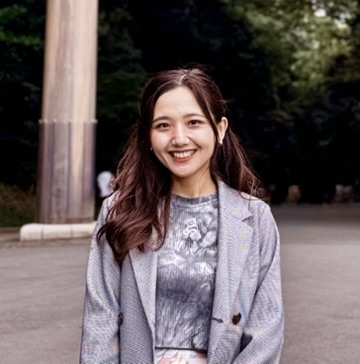
MAY THAZIN HLAING
Infrastructure Engineer · Kubernetes · Terraform · AWS / OCI
Tokyo, Japan
maythazinh@gmail.com
Infrastructure Engineer · Kubernetes · Terraform · AWS / OCI
Infrastructure Engineer supporting a production IoT platform on OCI and AWS: operating multi-region Kubernetes clusters, deploying with Helm and Terraform, and troubleshooting with Grafana and Loki. Recent work includes root-causing node disk-pressure evictions to Knative garbage-collection defaults, analyzing duplicate-message risk in an IoT ingestion scale-out, and authoring a cross-cloud architecture proposal for an Apache Iceberg lakehouse on OCI Object Storage. CKA, AWS Solutions Architect Associate, and Terraform Associate certified; JLPT N2 Japanese.
NOV 2012 – FEB 2018
Kyaing Tong University | Myanmar
Thesis: Password-Based Digital Door Lock System Using PIC Microcontroller
MAY 2018 – JUL 2018
Myanmar Posts & Telecommunications
Cloud Native Computing Foundation
Cloud Native Computing Foundation
Cloud Native Computing Foundation
HashiCorp
Cisco Systems

Amazon Web Services
Real investigations and designs from production work, described at architecture level.
The site you are reading runs on infrastructure I built end to end: a private S3 origin behind CloudFront with Origin Access Control, HTTPS via ACM, and optional edge Basic auth via CloudFront Functions — all defined in Terraform as a reusable module. A GitHub Actions pipeline plans on pull request and applies on merge, and the whole stack is engineered to stay inside the perpetual AWS free tier.
Pods were being evicted for node disk pressure. I traced the growth to Knative's revision garbage-collection defaults (up to 20 idle revisions retained, each pinning container image layers), and showed why deleting a revision alone frees nothing — the kubelet's image GC only fires at its own disk threshold. Measured the node filesystem to size the real win, and shipped the GC config through Terraform so the operator can't reconcile it away.
Our service that receives sensor messages (over CoAP, an HTTP-like protocol for small IoT devices) was scaled from one replica to two — which meant a device retry could deliver the same message to both replicas. I traced where a duplicate would actually end up: through the protocol's retry behavior and into every database table and queue downstream. The result: most tables were safe thanks to unique constraints, but one queue had no protection. I proposed the fixes — unique constraints, deduplication before publishing, plus health probes and graceful shutdown for the new replicas.
Evaluated moving an Apache Iceberg warehouse (Trino + Nessie on Kubernetes) from AWS S3 to OCI Object Storage. Root-caused the blocker to the AWS SDK's mandatory CRC32 checksum on bulk deletes, which OCI's S3-compatible API rejects — so writes succeed but table maintenance silently can't reclaim storage. Proposed a design that splits the write/query plane from a separate maintenance plane, with per-region warehouses and a phased rollout gated on a working deletion path.
Interested in my work or want to talk infrastructure? I'm based in Tokyo and work in English and Japanese (JLPT N2) — reach me by email or LinkedIn.